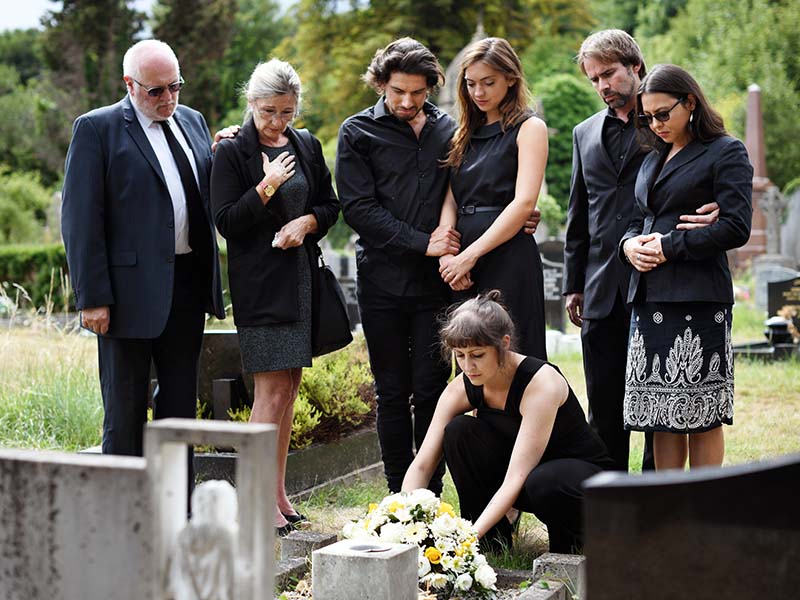
Arranging a funeral is difficult enough when everyone agrees on what should happen; when relatives have different views about the service, cremation or burial, religious traditions, costs or even who should be involved in making decisions, an already emotional time can become considerably harder.
Disagreements after a death are not necessarily a sign that a family is uncaring or divided. Grief affects people differently, and relatives may each feel strongly that they know what their loved one would have wanted.
The challenge is finding a way forward that keeps the person who has died at the centre of the arrangements.
An experienced funeral director can help families navigate difficult conversations, understand the practical options available and create a funeral that respects important wishes, traditions and relationships.
Why Do Families Disagree About Funerals?
Funeral disagreements can happen for many reasons.
One relative may want a traditional religious service while another prefers something contemporary and informal. There may be uncertainty about burial versus cremation, disagreements about spending, or differing opinions about music, flowers, clothing, and the location of the funeral.
Cultural and religious expectations can add another layer of complexity.
In Hindu or Sikh families, for example, particular rituals and timings may be extremely important to some relatives. In contrast, others may prefer to adapt traditions to reflect the personality or wishes of the person who has died.
Harmony Funeral Care provides Hindu, Sikh, and all-faith funeral services and works closely with families to arrange culturally important rituals and meet individual funeral requirements.
Start With the Wishes of the Person Who Has Died
Where possible, the first question should be:
What did they want?
Some people leave clear funeral instructions in a funeral plan, a will, or a separate written document. Others may have discussed their wishes informally with family members.
Perhaps they always said they wanted to be cremated. They may have chosen particular music, expressed a preference for a religious ceremony or said they wanted a simple funeral rather than an elaborate occasion.
Although not every preference will necessarily resolve a disagreement, agreed wishes can provide a useful starting point and shift the conversation away from what individual relatives want.
If no instructions exist, families may need to consider what best reflects the person’s beliefs, personality and values.
Separate the Important Decisions From the Smaller Details
When emotions are running high, relatively small decisions can become symbolic.
A disagreement over flowers may actually reflect a much deeper concern about whether a person’s wishes are being respected.
It can help to separate the decisions into categories.
The most significant arrangements may include the choice between burial and cremation, the religious or cultural nature of the funeral, the venue, and who is responsible for making the arrangements.
Other decisions — such as flowers, photographs, music or the style of funeral vehicle — may offer far more opportunity for compromise.
Harmony Funeral Care, for example, offers a range of personalised funeral options, including flowers, music, keepsakes, and various types of funeral transport, allowing families to incorporate several meaningful elements into a single farewell.
Can Different Traditions Be Included in the Same Funeral?
Often, yes.
Modern families may include different religions, cultures, and generations, and a funeral does not always have to fit perfectly into a single standard format.
It may be possible to retain important religious rituals while also introducing personal readings, favourite music, photographs or other tributes.
For multicultural or multifaith families, the aim should usually be to identify which traditions are genuinely important and then explore how other personal elements can be incorporated respectfully.
A funeral director experienced in handling funerals across different faiths and cultures can be particularly valuable here, as they can explain which arrangements are possible and coordinate with priests, religious leaders, crematoria, cemeteries, and other parties where required.
What If Family Members Disagree About Funeral Costs?
Money can be one of the most difficult subjects to discuss after a death.
One person may feel that a large funeral is an important demonstration of respect, while another believes the family should keep arrangements simple.
Before making commitments, establish the overall budget and understand what each element of the funeral will cost.
Separating essential costs from optional additions can make conversations easier.
Rather than approaching the discussion as “cheap versus expensive”, think about which elements are most meaningful. A family may decide to spend more on a particular religious ceremony or personalised vehicle while keeping flowers or other additions simpler.
Requesting a clear quotation from the funeral director can help everyone understand what is being proposed before decisions are finalised.
Avoid Turning the Funeral Into a Competition
When several relatives are grieving, there can sometimes be an unconscious pressure to prove who knew the deceased best.
“I know what Mum would have wanted.”
“Dad told me something different.”
“We’ve always done it this way in our family.”
These disagreements can become painful very quickly.
Try to remember that more than one interpretation can be valid.
A person may have had different relationships with different relatives and may even have expressed slightly different wishes at different times.
The funeral does not need to establish which family member was “right”. Its purpose is to provide an appropriate farewell.
Consider Giving Different Relatives Different Roles
One way to reduce conflict is to divide responsibility.
Instead of everyone having to agree on every detail, relatives can take responsibility for the areas that matter most to them.
One family member might choose photographs for a tribute. Another could organise flowers. Someone else could select readings or help coordinate guests.
This can give relatives meaningful involvement without requiring a committee decision over every small detail.
It can also help transform the arrangement process from a disagreement into something more collaborative.
How Can a Funeral Director Help When a Family Disagrees?
A professional funeral director is not there to choose sides.
Their role is to explain the available options, clarify practical requirements and help families understand what can realistically be arranged.
An experienced funeral director can also provide a neutral voice when conversations become difficult.
Sometimes hearing that there is a practical compromise from someone outside the immediate family can make a considerable difference.
Harmony Funeral Care is a family-owned, independent funeral provider and describes its approach as placing the needs of bereaved families at the centre of the service. Its team provides support for Hindu, Sikh, and all-faith funerals, as well as repatriation and broader funeral arrangements.
Give Yourself Time Where Possible
Some funerals need to happen quickly because of religious customs or individual circumstances. In other cases, taking a little time before finalising a disputed decision can help.
Grief, exhaustion and shock can make disagreements feel more intense.
If there is no immediate deadline, avoid making every decision in a single emotionally charged conversation.
Write down the points that have been agreed, identify the areas still requiring discussion and ask the funeral director about any practical deadlines.
This can make the process feel more manageable.
Keep the Person You Are Remembering at the Centre
There may not always be a solution that leaves every family member completely satisfied.
What matters is creating a funeral that treats the person who has died with dignity while allowing those closest to them an opportunity to say goodbye.
Try to return to the same question whenever disagreements arise:
Does this decision help us create a farewell that reflects them?
That can provide a much clearer direction than trying to satisfy every individual preference.
Compassionate Support When Funeral Arrangements Feel Difficult
Families should not feel that they have to navigate complicated funeral decisions alone.
Harmony Funeral Care provides 24-hour support for families following a death. It offers Hindu, Sikh and all-faith funeral services, alongside repatriation, personalised funeral options and practical guidance throughout the arrangement process.
If your family is unsure how to proceed or different relatives have conflicting wishes, speaking to an experienced funeral director can help clarify the available options.
With patience, communication and professional guidance, it is often possible to find common ground and create a farewell that feels respectful, personal and meaningful to everyone involved.